

Watch the full episode on Iowa Starting Line’s YouTube.
YouTube | Instagram | TikTok | Twitter | Bluesky | Threads | LinkedIn
Happy Wednesday. And welcome back to Cornhole Champions. I'm Zachary Oren Smith.
Thirty-nine years ago this month—August 23, 1986—something happened that would shake Iowa to its core. At 12:01 a.m., thousands of UAW workers walked off the job at John Deere facilities in Waterloo and Dubuque. It was the beginning of what would become the longest strike in the company's history: 163 days of picket lines, lost wages, and a fight over job security that split communities and families.
I've been thinking about that strike this week because of what happened this month.
John Deere announced 238 more layoffs across Iowa and Illinois—71 at the Foundry in Waterloo, 115 at the Harvester Works in East Moline, and 52 at the Seeding and Cylinder in Moline. In a recent earnings call, the company blamed tariff costs that could reach $600 million by the end of this year. The company has already seen $300 million in tariff expenses year to date.
Former Vice President Mike Pence... *checks script* Yes, Mike Pence and the Wall Street Journal... have been raising the alarm about the impact that tariffs are having on an industry already experiencing strain due to low corn, soybean, and wheat prices. Pence tweeted: "American Companies and American Consumers Pay the Cost of American Tariffs."
The policies change—from the Farm Crisis to trade wars—but Iowa workers keep getting stuck with the bill. Different decade, different crisis, same result: Iowa workers bearing the cost of decisions made elsewhere.

But first...
Drey breaks supermajority - Last night, Democrat Catelin Drey won a special election for a Sioux City seat in the Iowa Senate. That puts the Iowa Senate’s split at 33-17. In other words, Republicans lost their Iowa Senate supermajority. Catch Laura Belin of Bleeding Heartland and me at 8 a.m. this morning. We’ll be walking through the results live with Drey herself.
Empty desk policy - 157 Iowa school districts are now on a budget guarantee, meaning they're losing so many students the state has to make up the funding shortfall. The Gazette reported that 157 has grown by 43 since before the pandemic. Of Iowa's 325 districts, 211 lost enrollment this year while only 114 gained. Nearly a third of our districts serve fewer than 500 students total.
Homeless encampment attack - The news has limitations. It’s why at this job, I’m glad we’re building a platform that sees the value in telling a complicated story:
Not even past - The State Historical Society will close its Iowa City research center next summer to save $800,000—a minuscule part of the state budget. Only 40% of the collection can fit in Des Moines. The other 60%? Well, it's working on that... Meanwhile, hundreds gathered in Iowa City to rally against its closure. We're talking about 168 years of Iowa history, including irreplaceable records from women's suffrage movements and the Meskwaki Settlement.
Town hall not found - US Rep. Mariannette Miller-Meeks still hasn't held an in-person town hall in her district. She has promised to do so, but still no word on whether that promise will be kept. Also this week, US Rep. Zach Nunn, in a profile in courage, said he wouldn't do town halls now, calling them "a taxpayer-funded protest event."
And now, why there's no such thing as a health tan... don't @ me...
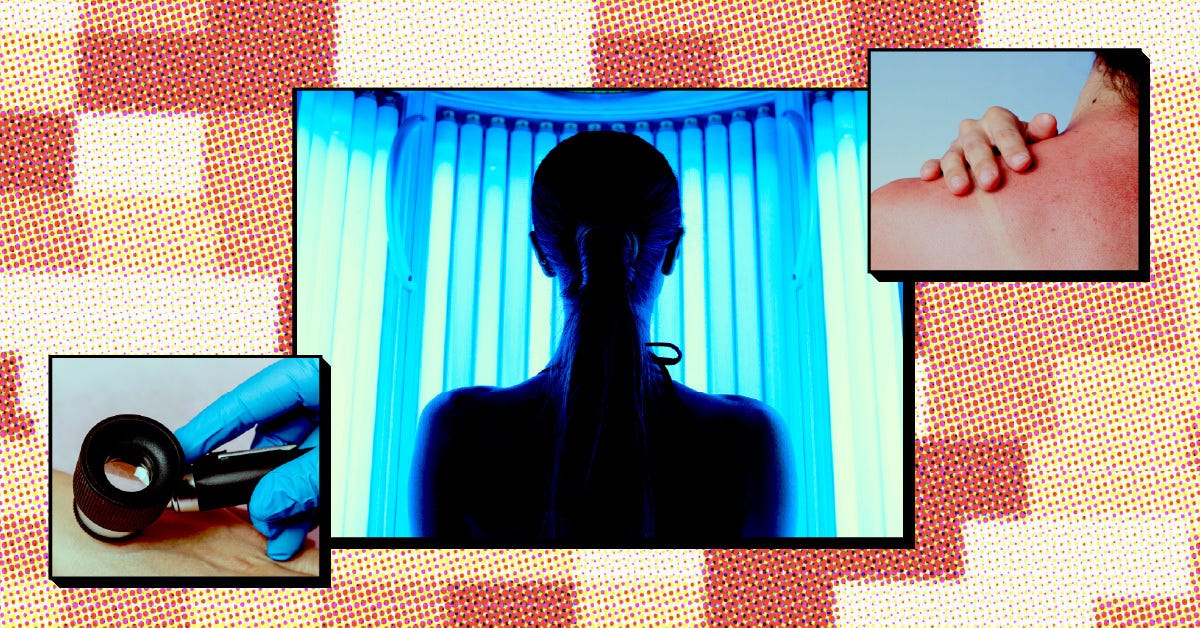
Under the Iowa sun: The work that drives the state’s high skin cancer rates
Iowa has the fifth-highest rate of skin cancer in the country, with numbers similar to states with far more UV radiation levels. This week on The Hot Spot, we look into the forces impacting our cancer rate.
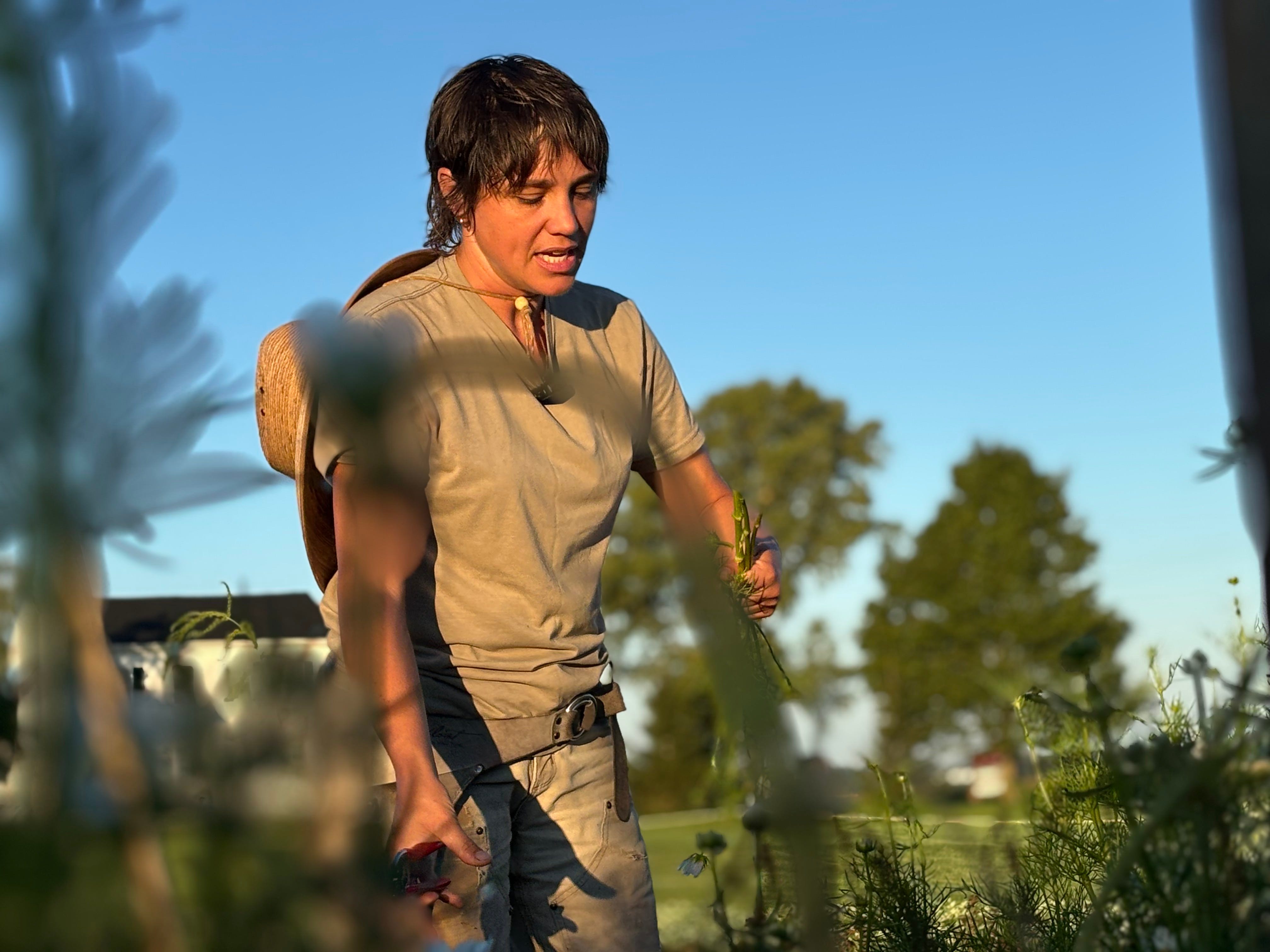
Kim Schmidt pumps sunscreen from a bulk dispenser in the barn, slathering it on her arms and neck before going to work at Rhubarb Botanicals near Mount Vernon. The 39-year-old farmer has been working outdoors for the last 15 years, and the ritual is as routine as grabbing her harvest buckets or feeding the three barn cats: Parsley, Rosemary, and Sage.
"When you have to apply multiple times a day, you just buy it in bulk," Schmidt said, adjusting her wide-brimmed lifeguard hat before walking into rows of cosmos and dahlias.
When wildfire smoke drifts down from Canada, when pesticides blow in from nearby fields, and when the sun feels especially unforgiving, Schmidt is one of more than 5,000 Iowa workers regularly toughing it out on the job.
She knows the stakes. Her grandfather, a dairy farmer, battled multiple cancers, including melanoma. Her father, a veterinary technician, died of cancer at 49. As she nears 40, Schmidt said cancer is never far from her mind.
"It's hard not to think about as I get older and as I continue in this line of work," she said.
Schmidt’s concerns reflect a broader public health problem. In a state where agriculture dominates the economy, few restrictions exist on indoor tanning, and access to health care for rural residents is limited, Iowa’s rate of melanoma is among the highest in the nation.
An agricultural state's hidden risk
In 2025, there were 104,960 new cases of skin melanoma diagnoses in the United States, according to the National Cancer Institute data. The 2025 Iowa Cancer Registry reports 1,420 of those cases were here, making melanoma the fifth most common type of cancer in the state.
Most skin cancer cases are caused by too much exposure to ultraviolet (UV) radiation from the sun. The UV rays damage skin cells. While sunburns are the common short-term symptom, UV damage adds up over time. It can change skin texture, age skin prematurely, and sometimes cause cancers to develop.
UV radiation in general increases the further south in the US you are, according to data from the Centers for Disease Control and Prevention. Maine has a very low level UV exposure. Arizona has among the highest. However, the rate of skin cancer incidence does not follow that gradient. To be clear, Arizona does have a high incidence rate of cancer (31.4 cases per 100,000). But so does Iowa, which has the same rate.
"It's because of our agricultural population," said Dr. Marta Van Beek, a dermatologist at UI Health Care. She's spent decades treating Iowa patients and said the research is clear. "We know that melanoma and non-melanoma skin cancer, such as squamous cell carcinoma or basal cell carcinoma, are much more common in people who work outdoors."
According to a systematic review and meta-analysis from the World Health Organization (WHO) and International Labour Organization (ILO), workplace exposure to UV radiation increases a person's risk of skin cancers. And Iowa's economy depends heavily on outdoor work. According to the USDA's 2022 Census of Agriculture, nearly three-fourths of Iowa's area is used for crops and rotational pastures.
No such thing as a healthy tan
Aaron Knight is a musician in Iowa City, but by day he works outside as a stone mason. On job sites, he said, some precautions are taken less seriously than others. He recalled a tile job he was doing some years back, where he spent hours hunched over the floor. Someone ribbed him about it when they noticed he was using knee pads.
"'You're using a knee pad? Really?'" Knight said. "Some people use face masks when they're cutting stone and some people are like, 'I don't need a mask. I don't need glasses. I don't need earplugs.' Sunscreen's one of those too, where some people are like, 'I'm not gonna waste my time.'"
He said it's normal to get burned on the job in the beginning of the season.
"It's kind of a running joke," he said. "You get a good baseline burn."
But Knight takes it pretty seriously. His sister died of liver cancer, and his mom had a melanoma removed from her skin. He joked that sometimes he goes out behind the truck to put sunscreen on out of view.
Van Beek said Iowans working outside should reapply sunscreen every two hours, but she understands the practical challenges workers face. "When you are out in the fields or with livestock and trying to get things done, to pause and remember to do that can be quite disruptive."
When asked about the two-hour sunscreen reapplication recommendation, Knight said it was probably a good idea, but he didn't know anyone who reapplied sunscreen that often.
"That's a lot of sunscreen," he said.
Even if people aren’t reapplying sunscreen perfectly, Van Beek said skin cancer rates in the US show people are taking UV risk more seriously. In her decades of practice, she’s seen attitudes toward sun protection improve, protective clothing become more accessible, and tans fall out of fashion. Even farm equipment has evolved, with enclosed tractor cabs replacing open models that left workers exposed.
Still, the fundamental risk for Iowa's outdoor workforce remains.
Iowa allows minors to use tanning beds
While Iowa outdoor workers face unavoidable UV exposure, a preventable danger comes from indoors: tanning beds. According to the American Academy of Dermatology, indoor tanning increases the chances of developing squamous cell carcinoma by 58% and basal cell carcinoma by 24%.
Van Beek's recommendation on tanning beds is firm: "Do not use a tanning bed. That's an emphatic: do not use." Many of her melanoma patients were chronic tanning bed users. And using tanning beds before age 20 can increase your chances of developing melanoma by 47%; that risk increases with each use.
The US has a "patchwork" of legislation regarding the restriction of tanning bed use by minors. According to a 2022 review, Iowa is among just five states with no restrictions for minors using tanning beds on the books. (Twenty-two states and the District of Columbia ban minors completely.)
Iowa state Rep. Hans Wilz, an Ottumwa Republican, sponsored a bill this year to require parental permission for minors to use tanning beds. It passed in the House, but was among the bills that stalled out this session.
The challenge for both patients and policymakers is that skin cancer often develops decades after exposure occurs. Van Beek said she frequently encounters patients in their 50s who assume it's "too late" to start protecting themselves because of childhood sun damage.
"My answer is, if you want to spend a lot of time with me in your seventies, then you can be very cavalier about your sun exposure," Van Beek said. "But if you want to decrease how much time you see me and spend on my operating table, then it behooves you to wear sunscreen in your fifties because that directly affects how much skin cancer you get a decade or two later."
The cumulative nature of sun damage means that every day of protection matters, regardless of past exposure.
Rural Iowans face barriers to care
For many, the biggest obstacle isn’t recognizing the cancer risk associated with tanning beds or working outdoors unprotected—it’s reaching a doctor in time. Rural residents often live far from dermatologists, creating delays in diagnosis that can affect outcomes.
"We know that the earlier we diagnose you—whatever type of skin cancer it is—the better you do," Van Beek said. "The longer ways you live from a board-certified dermatologist, the more likely you will get diagnosed later because access is more difficult."
While primary care providers help bridge this gap by conducting biopsies and making referrals, Van Beek emphasized that diagnosing skin cancer is often more complicated than it seems. In other words, sun damage can go unchecked until it becomes serious.
For farmers like Schmidt, the health risks don't diminish their connection to the land. She spends eight hours or more outside most days, harvesting flowers, deadheading spent blooms, and managing the acre and a half of growing space at Rhubarb Botanicals.
Many workers in her crew wear long sleeves to protect their arms from the unrelenting sun, but she trades extra coverage for mobility and comfort on muggy summer days.
"There's corn sweat everywhere," she said, referring to the humidity corn crops release into the air. "It's just uncomfortable."
No single day of exposure—or sunburn—causes melanoma. But every day in the sun raises that risk.
"I love being outside. I love touching plants and being in relationship with nature. But it does come at a cost, right?" Schmidt said. "It's still a very taxing job on your body, and the sun, it's part of that."

Question for you
It's probably clear from my video on this story, but I learned I'm not using best practices when it comes to protecting my skin from the sun. Like, not even close. Two hours!? In my reporting, I'm trying to do my best to establish some vulnerability—or maybe more accurately—I'm trying to tell you when I'm wrong about something. When I don't know something. When I've made a mistake.
My adage has always been, Eat crow early; eat crow often. Dealing with it when you're wrong is a lifestyle, and its the only responsible way to live for someone who writes as much as I do for you. And so here's my question...
Have you ever been impressed by how someone responded to being corrected? It's a hard thing to do. I'd love to hear how they did it.
Send your answers to zach@iowastartingline.com. I might feature your response in Friday's edition.
Before you go
Support this work by doing these three things:
Subscribe to Cornhole Champions on YouTube and like our videos to improve their reach.
Join the game by signing up for my Substack newsletter and get these episodes straight to your email on Wednesday mornings.
Sign up for Iowa Starting Line's flagship newsletter.
Cornhole Champions is a weekly podcast powered by Iowa Starting Line. This podcast is produced by me and edited by Rebecca Steinberg. Our music is by Avery Mossman and our show art is from Desirée Tapia.
Your friendly neighborhood reporter,
Zachary Oren Smith
Political correspondent
Iowa Starting Line


